
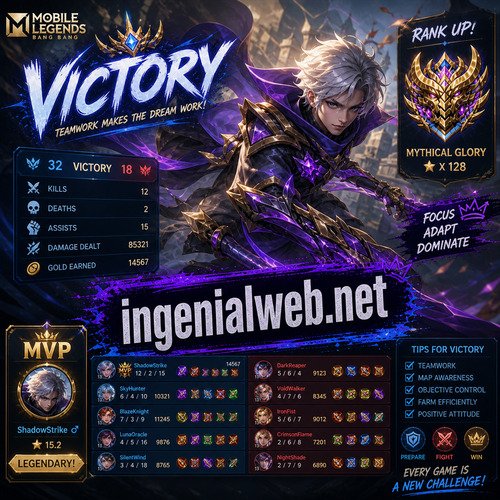
Understanding Why Damage Timing Matters in Mobile Legends
ingenialweb.net – In Mobile Legends: Bang Bang, dealing a large amount of damage does not always mean that a team is winning a fight. Players can land powerful abilities, reduce several enemies to low health, and still lose the engagement because their attacks arrive at the wrong time. Damage becomes more valuable when it is coordinated with teammates, directed toward a suitable target, and delivered during a moment when the enemy has limited opportunities to recover. Understanding this distinction helps players move beyond simply pressing available skills and begin treating combat as a sequence of connected decisions.
Imagine a teamfight in which a mage uses a powerful area ability while an assassin is still approaching from another direction. The mage may force several enemies to retreat, but the assassin could arrive after the targets have already recovered their positioning. Alternatively, the assassin might use an important skill on a target that the team’s marksman has already nearly defeated, wasting damage that could have been directed toward another opponent. Neither player necessarily makes an obvious mechanical mistake. The problem is that their actions are not sufficiently coordinated in time.
This issue becomes more noticeable when both teams have heroes capable of dealing burst damage. A short opening may determine whether a target survives long enough to receive healing, activate a defensive ability, or escape behind teammates. If several allies deliver their strongest attacks during that opening, the target may be eliminated before the enemy can respond. If those same abilities arrive several seconds apart, opponents may have time to recover between attacks. The total damage available to the team has not changed, but the practical result can be completely different.
Damage timing also matters when fighting durable opponents. Some heroes can survive an initial burst through shields, healing, damage reduction, or temporary defensive effects. Using every major ability immediately may leave the team with limited follow-up options once those protections end. A more deliberate sequence can force the opponent to spend defensive resources first, then apply heavier damage when the target becomes easier to defeat. This approach requires players to observe what happens during the fight instead of following a fixed skill rotation regardless of circumstances.
Players should also recognize that not every attack needs to contribute directly to an elimination. A tank may use crowd control to interrupt an enemy’s approach, while a roamer creates enough space for a marksman to attack safely. A mage may force a dangerous opponent away from a narrow entrance, reducing the threat to the backline even without securing a kill. These actions can make subsequent damage more effective by limiting the enemy’s ability to retaliate or escape. Good coordination therefore includes both offensive and protective abilities.
The objective is to make each important action support the next one. Before using a major skill, consider whether an ally can follow up, whether the target can escape, and whether another enemy presents a more immediate threat. During the fight, adjust the plan according to the actual situation. Players who understand damage timing can make their existing heroes more effective without relying exclusively on higher mechanical speed or increasingly aggressive plays.
Identifying the Right Moment to Commit Major Abilities
Major abilities often determine how a teamfight develops, especially when they provide burst damage, crowd control, or powerful area effects. Using these skills at the right moment can create a decisive advantage, but committing them too early may allow opponents to avoid the most dangerous part of the attack. The challenge is recognizing when an enemy has become vulnerable enough for the team to invest its strongest resources.
One useful signal is the opponent’s movement. Enemies who are still approaching cautiously may have enough room to dodge or reposition before an ability connects. Targets who have already committed to attacking an ally, clearing a wave, or moving through a narrow area may have fewer options to escape. This does not mean players should wait indefinitely for a perfect opportunity. Instead, they should distinguish between an enemy who is merely visible and one whose current action makes a successful attack more likely.
Crowd control can create another valuable opening. When an opponent is stunned, knocked airborne, or otherwise prevented from moving, follow-up damage becomes easier to land. However, the team should avoid wasting several overlapping control abilities when one would have been sufficient. If one teammate already prevents a target from moving, another player may be able to prepare damage for the moment the initial control ends. Coordinating these actions extends the team’s ability to threaten the target and reduces unnecessary duplication.
The availability of enemy defensive skills must also influence the decision. Some opponents can escape with a dash, become temporarily untargetable, or protect themselves through shields. Using a powerful ability before these tools are spent may produce little value if the target can avoid most of its effect. In certain situations, a smaller attack can encourage the enemy to use a defensive skill, creating a better opening for the team’s main damage. This approach should be based on the specific matchup rather than applied mechanically in every encounter.
Players must consider their own team’s condition as well. If the primary damage dealer has low health or lacks a reliable escape route, an aggressive commitment may expose that hero to immediate retaliation. If the team’s most important abilities are unavailable, it may be wiser to maintain a defensive position until they return. Conversely, when several key skills are ready and the enemy has just spent important defensive resources, a decisive engagement may be appropriate.
The best timing is not necessarily the earliest possible moment. It is the moment when the team has a reasonable chance to convert its abilities into a meaningful result. Players who develop this habit will waste fewer major skills, coordinate their attacks more naturally, and recognize when a fight should begin or be postponed.
Adjusting Attack Sequences to Different Enemy Formations
A teamfight rarely develops exactly as expected. Enemies may spread out to avoid area damage, gather tightly to protect a vulnerable teammate, or position themselves around terrain that restricts access. Because formations change the opportunities available to each hero, players should adjust their attack sequences rather than repeating the same combination in every fight.
Against a tightly grouped formation, area damage and broad crowd control may provide considerable value. A mage who can threaten multiple targets may force the enemy to separate, making it harder for opponents to protect one another. However, using every area ability at once may leave the team without meaningful follow-up if the enemy survives. Coordinating one important ability with additional attacks can create pressure while preserving options for the next exchange.
A spread-out formation presents a different challenge. Area abilities may hit only one target, while enemies positioned at different angles can threaten the team’s backline. In this situation, selecting a manageable target may be more effective than attempting to damage everyone. The team can focus on an opponent who moves too far from support, provided the approach does not expose its own vulnerable heroes. If no target can be attacked safely, controlling space and waiting for the formation to change may be the better decision.
Defensive formations require additional patience. A tank may stand between the team and its damage dealers, while a support provides healing or protection from behind. Sending every offensive ability toward the frontline can waste valuable resources if the team cannot defeat that target before the enemy’s backline responds. Yet attempting to bypass the frontline without considering enemy control skills can be equally dangerous. Players should look for opportunities created by movement, spent abilities, or temporary separation instead of assuming that the backline is always the correct first target.
The enemy’s formation can also change during the engagement. A target who begins near teammates may become isolated after using a mobility skill, while a scattered enemy team may suddenly group together to protect a low-health hero. Players must reassess the situation after each major ability rather than continuing with an outdated plan. This flexible approach helps the team use its damage where it is most likely to matter.
Ultimately, effective attack sequences are built around the enemy’s current position and available responses. Players should understand what their abilities can accomplish, but they must also recognize when the conditions no longer support the original plan. Adapting quickly is often more valuable than executing a theoretically perfect combination against a formation that no longer exists.
Improving Team Coordination Through Better Combat Decisions
Crowd control is valuable because it can temporarily reduce an opponent’s ability to move, attack, or use skills effectively. However, control alone does not guarantee a successful teamfight. Its value depends on whether teammates can use the opening to deal meaningful damage, protect an ally, or secure a strategic position. Learning to connect control effects with follow-up actions is therefore an important part of improving team coordination.
Before an engagement, players should consider which heroes can begin a fight and which ones provide the strongest follow-up. A tank may have reliable initiation but limited damage, while a mage or assassin may have powerful attacks that are difficult to land without assistance. When these roles understand their relationship, the initiating player can create an opening that the damage dealer is prepared to exploit. The team does not need perfect synchronization down to a fraction of a second, but it does need a shared understanding of the intended sequence.
The duration and type of crowd control matter. A short interruption may be enough to stop an enemy from escaping, but it may not provide sufficient time for a slow-moving ability to connect. A longer control effect can support a more deliberate combination, although enemies may still have defensive tools that alter the result. Players should learn the practical timing of their heroes’ abilities through experience and avoid assuming that every control effect creates the same opportunity.
It is equally important to avoid unnecessary overlap. If two teammates use their strongest control skills on the same target at nearly the same moment, part of their potential value may be lost. One ability might have been sufficient to secure the initial opening, leaving the second available to stop another enemy or prevent an escape. There are situations where overlapping control is justified, especially against a dangerous target who must be eliminated immediately, but it should be a deliberate choice rather than an automatic reaction.
Follow-up damage should also reflect the wider fight. If the initial target becomes protected by a teammate, the damage dealer may need to switch to a more accessible opponent. If an enemy assassin begins attacking the backline, the team may need to interrupt the original combination and defend its vulnerable players. A planned sequence is useful, but it should never prevent the team from responding to a more urgent threat.
Players can improve by reviewing whether their abilities created opportunities that teammates were actually able to use. If an initiation repeatedly fails to produce follow-up, the problem may involve positioning, communication, or timing rather than the initiating hero itself. By treating crowd control as the beginning of a coordinated action instead of an isolated achievement, teams can create more reliable combat opportunities.
Avoiding Damage Waste When Several Enemies Are Vulnerable
A common mistake during chaotic fights is spreading important abilities across several targets without a clear plan. Players see multiple opponents with low health and instinctively attack whichever enemy appears closest. This reaction can leave every target alive long enough to recover, while the team’s most valuable cooldowns become unavailable. A more disciplined approach considers which opponent can be eliminated safely and which attacks are necessary to achieve that result.
Target selection should account for more than current health. An enemy with slightly more health may be easier to eliminate because the hero has already used an escape ability or moved away from defensive support. Another target may be nearly defeated but protected by a shield, a healing effect, or a teammate who can intervene. Comparing these factors helps the team decide where its next sequence of damage is most likely to succeed.
Players should also estimate how much damage their teammates can provide. If a marksman is already attacking a nearly defeated opponent, an assassin may not need to spend every major ability on the same target. The assassin can prepare to threaten another vulnerable enemy, provided the first target is likely to be eliminated by the existing attacks. This division of effort is not always possible in fast engagements, but even a brief assessment can prevent substantial waste.
At the same time, players should not split damage simply for the sake of attacking different opponents. Concentrating attacks can be the correct choice when a target has dangerous control abilities, provides critical support, or can escape if allowed to remain alive. Eliminating one enemy reduces the number of opponents who can contribute to the fight, potentially making the remaining engagement much easier. The objective is to balance focus with efficiency, not to distribute damage evenly across the enemy team.
Ability costs must be considered as well. If a hero uses a long-cooldown ultimate to finish an opponent who would have died to a basic attack, the immediate elimination may still be useful, but the team could lose an important tool for the next phase of the fight. In urgent situations, spending the ability may be justified. In less dangerous circumstances, preserving it for a stronger target or a later threat may offer more value.
After the fight, evaluate whether the team’s attacks were concentrated enough to secure eliminations without leaving other dangerous opponents unchecked. Ask whether a target escaped because too little damage was committed or whether several allies unnecessarily attacked someone who was already certain to fall. These observations help players make better decisions in future engagements and use their heroes’ abilities with greater purpose.
Maintaining Coordination When the Original Plan Breaks Down
Even a well-prepared teamfight can change within seconds. An enemy may survive an expected burst, a teammate may be displaced, or a defensive ability may prevent the planned elimination. When this happens, players must adapt without allowing the entire team to become disorganized. The ability to recover from a failed sequence is often just as important as executing the original plan correctly.
The first step is to recognize what has changed. If the intended target escapes, determine whether pursuing that hero remains worthwhile or whether another enemy has become vulnerable. If the team’s frontline loses a large amount of health, the damage dealers may need to retreat behind safer positions instead of continuing their attacks. If an enemy ability disrupts the formation, teammates should reassess their spacing before attempting another coordinated commitment.
Communication should remain short and useful. Players can indicate that a major ability has been used, identify a dangerous enemy, or signal that the team should withdraw. During a fast fight, long explanations are unlikely to help. Clear information gives teammates a better chance to understand the immediate situation and make compatible decisions without requiring everyone to follow a rigid script.
Retreating should also be treated as a coordinated action. When one teammate begins to withdraw, others should consider whether continuing the fight will leave that player isolated or allow enemies to pursue the team separately. Sometimes a durable hero can create space while vulnerable allies escape. In other cases, the safest response is for everyone to disengage as quickly as possible. The correct decision depends on available health, mobility, enemy positions, and the danger of remaining in the area.
Players should avoid blaming teammates while a fight is still unfolding. Arguments consume attention and rarely improve the immediate situation. Instead, focus on the next useful action: protect an ally, interrupt a pursuer, clear a dangerous route, or move toward a safer position. Reviewing mistakes after the engagement is more productive because players can examine the sequence without the pressure of an active fight.
Once the battle ends, consider which part of the plan failed and why. Perhaps the team committed damage before crowd control connected, selected a target protected by several enemies, or continued fighting after its frontline could no longer hold position. Identifying one specific improvement is more useful than deciding that the entire engagement was simply bad. Over time, these small adjustments help teams coordinate more consistently, preserve important abilities, and respond more effectively when fights develop differently from expectations.
Conclusion How to Play Mobile Legends: Coordinating Damage Timing for More Effective Teamfights
Effective damage timing in Mobile Legends is about making attacks work together rather than using every available ability as soon as possible. Players need to recognize vulnerable moments, understand enemy formations, and coordinate major skills with crowd control and follow-up damage. These decisions help turn temporary openings into meaningful advantages while reducing wasted cooldowns and unnecessary exposure.
Strong coordination also requires flexibility. When targets escape, defensive abilities interfere, or teammates become vulnerable, players should reassess the fight instead of blindly continuing the original sequence. Clear communication, sensible target selection, and disciplined disengagement allow a team to preserve its resources and avoid turning a small mistake into a complete defeat.
By practicing deliberate ability timing and reviewing the results of each engagement, players can improve their teamfight decisions without depending solely on mechanical speed. The goal is to ensure that every important action supports the team’s immediate needs, whether that means securing an elimination, protecting a teammate, controlling an area, or withdrawing before the enemy gains the advantage.
